By Sarang Narasimhaiah
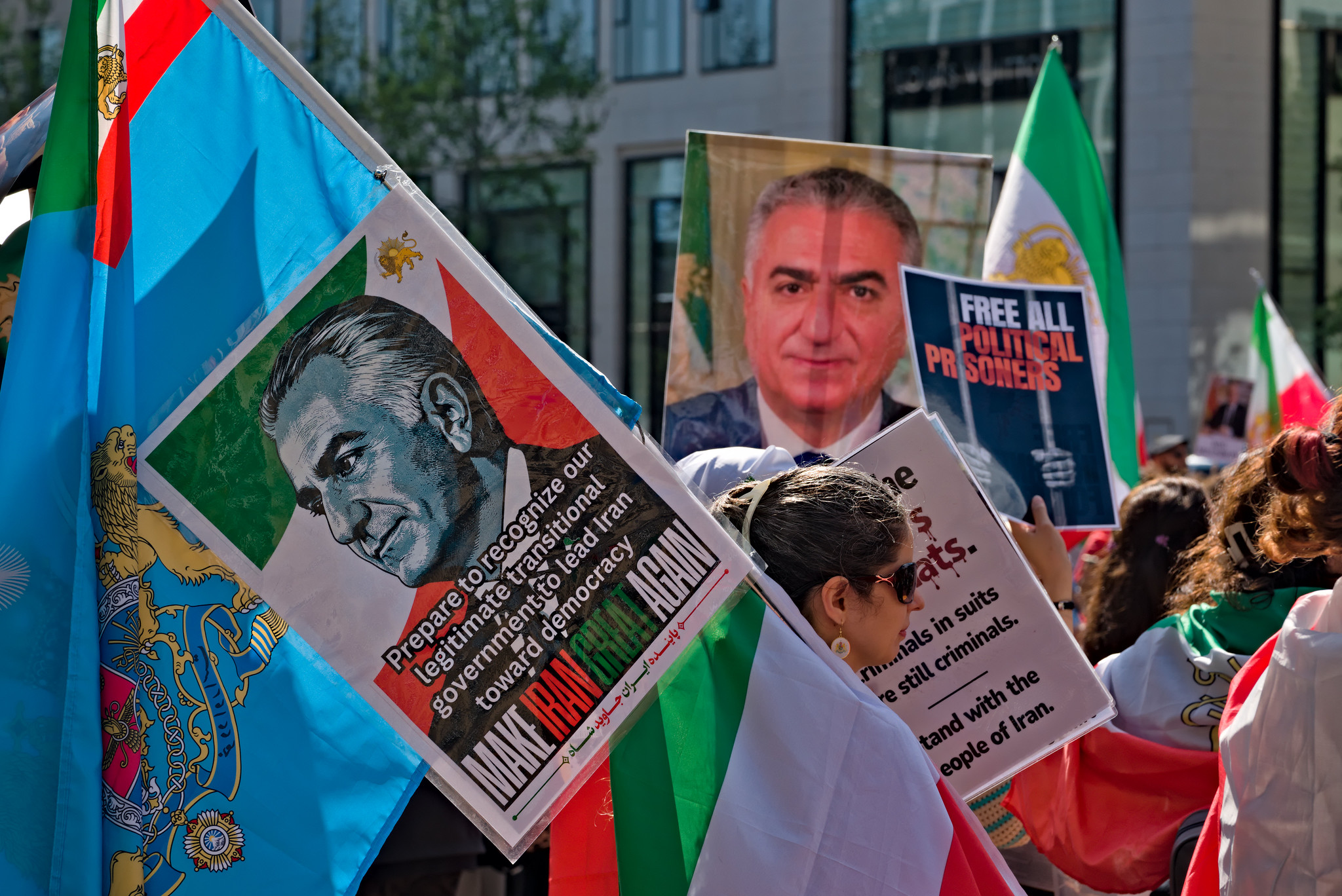
“Make Iran Great Again,” reads a seemingly AI-generated poster showing US President Donald Trump squinting purposefully into the middle distance alongside Reza Pahlavi, the son of Iran’s last shah and an enthusiastic cheerleader for regime change in the country he considers his birthright. This poster prominently featured in Iranian diasporic protests throughout North America in early 2026, a number of which attempted to rebrand naked American imperial aggression against Iran as “rescue” and “liberation.”
The peculiar political camp represented by MIGA is not an outlier that can be dismissed out of hand. Rather, it epitomizes reactionary currents visible within several Stateside diasporic communities. Many Vietnamese businesses in the United States fly the flag of the brutal former puppet state of South Vietnam. The Miami Cubans have gained enough notoriety to warrant their own moniker; Venezuelans, Brazilians, and other Latin American migrants from disproportionately petit-bourgeois backgrounds have joined them in parroting anti-communist talking points and defending the most autocratic neo-imperial puppets vying for control of their homelands. In 2019, well-to-do and well-connected non-resident Indians and Indian Americans hosted a garish welcome reception in Houston, Texas, for India’s Hindu nationalist prime minister Narendra Modi, who was introduced by none other than Trump himself; Trump has further appointed Indian Americans such as Kash Patel and Nikki Haley to some of the highest ranking positions across his two administrations. Perhaps most obviously of all in recent years, Zionists have teamed up with white supremacists, the police, and the federal government to viciously attack anyone who questions the genocidal Israeli ethno-state. Members of these and other diasporic communities have noticeably joined and even climbed to positions of power in various American far-right organizations, from Patriot Prayer to the Proud Boys.
These currents are not coincidences. The United States is perhaps the world’s foremost breeding ground for diasporic fascism, due to a combination of historical factors grounded in its settler-colonial, capitalist, and imperialist makeup. Understanding these factors is essential for effectively confronting the rising tides of reaction in both the United States and around the world. In other words, diasporic fascism drives home the stakes of anti-capitalist, anti-imperialist, and anti-colonial struggle in the United States: dismantling the infrastructure of American fascism may well require cutting off vital support systems for regressive nationalist, capitalist, and neo-colonial projects elsewhere.
The United States is perhaps the world’s foremost breeding ground for diasporic fascism, due to a combination of historical factors grounded in its settler-colonial, capitalist, and imperialist makeup. Understanding these factors is essential for effectively confronting the rising tides of reaction in both the United States and around the world.
Belonging, Complicity, and Collaboration
Diasporic fascism’s potential roots in the United States are manifold and knotted together. Firstly, and perhaps most straightforwardly, modern US immigration policy has often favored migrants from more economically and socially powerful backgrounds in their societies of origin, in terms of relative ease of access and state recognition if not always in terms of sheer numbers. The landmark Immigration Act of 1965 expressed a marked preference for educated professionals, opening the doors to doctors, scientists, and engineers from South and East Asia in particular while establishing a vital precondition for immigration from everywhere else. These migrants tended to hail from the middle- to upper-middle-class strata of their societies of origin; notwithstanding a certain unavoidable degree of material and ideological diversity, they unsurprisingly brought along many of the prejudices and class projects that had propped up their positionalities at home.
The proliferation of caste domination and Hindu nationalism within South Asian American communities is arguably an instructive example here. Dalit rights organization Equality Labs and its cofounder Thenmozhi Soundararajan have meticulously exposed how the more than 3,000-year-old caste hierarchy has traveled with South Asians virtually wherever they gone in the world, including and perhaps especially the United States. In a groundbreaking 2018 report titled, “Caste in the United States,” Equality Labs researchers show that caste-based discrimination and abuse have festered across several major domains of South Asia diasporic life in the American imperial core, from work to marriage to religious worship.
Caste is so deeply entrenched in South Asian society and culture, both at home and abroad, that it has suffused a number of communities, religions, and ideologies. Nevertheless, its roots in Hinduism are incontrovertible, and it has proven particularly conducive to the fomentation of Hindu nationalism across these spheres, in combination with class stratification. Hindu nationalist organizations have had a prominent presence in South Asian American communities for over five decades, and this fascistic infrastructural investment has reaped considerable financial rewards. According to a 2022 report published by the South Asian Citizens Web, several major organizations with ties to the Hindu right spent close to $160 million dollars between 2001 and 2019, with the majority of this sum going back to India.
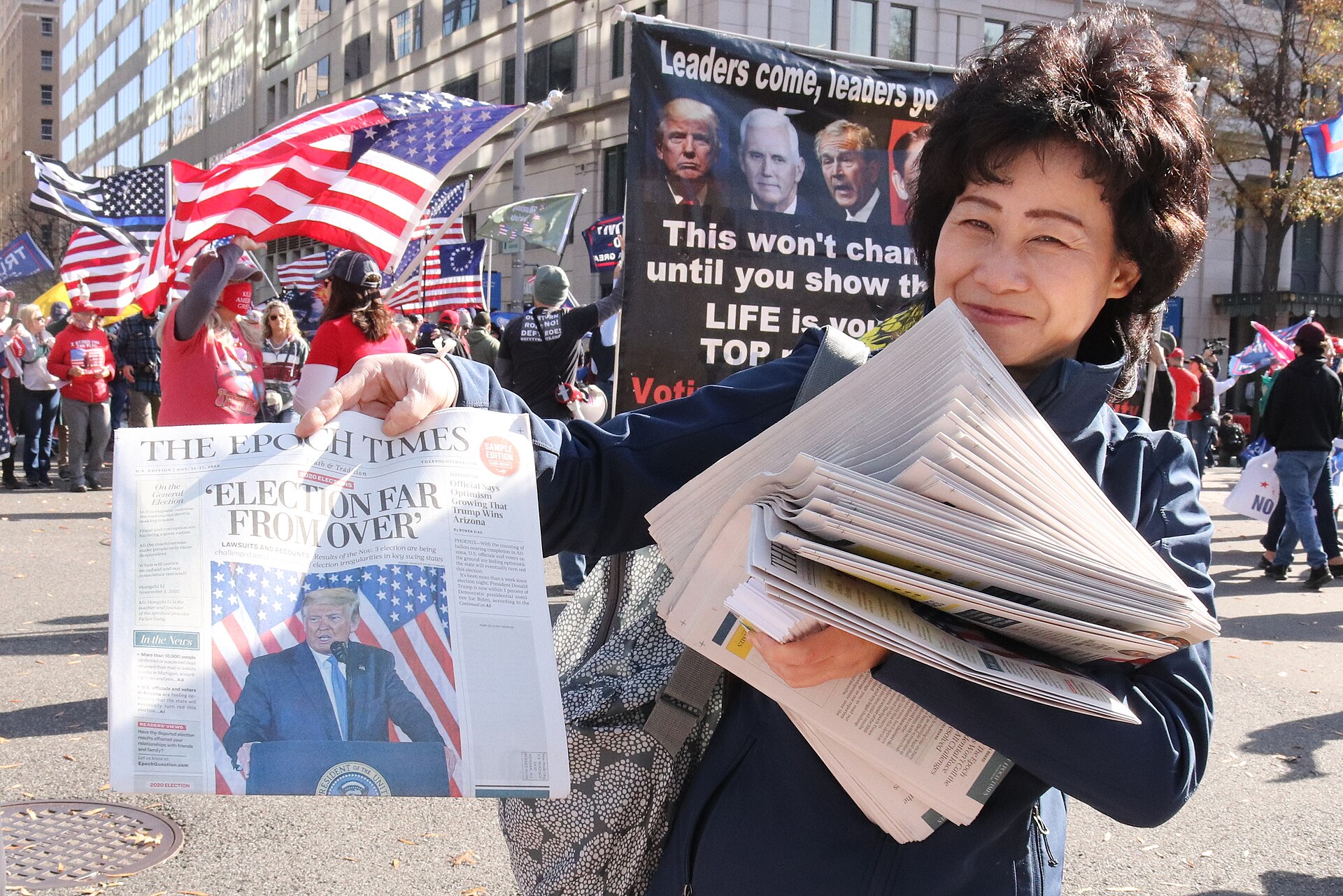
Hindu nationalists may rank among the most well-organized and well-funded diasporic fascists in the United States. The Falun Gong cult is a comparable example from the Chinese American community: its racist, homophobic, ultra-conspiratorial leader in exile Li Hongzhi resides on a 173-hectare compound in upstate New York, while its tabloidesque newspaper The Epoch Times has become a right-wing touchstone in the New Cold War on China, and billboards promoting its handsomely mounted—and rabidly anti-communist—musical production Shen Yun have become a fixture of several American cities with sizeable Chinese American populations. Blatant overtures to the right in this vein tend to encounter little to no resistance from the majority of American liberal powerbrokers, by virtue of the latter’s obstinate commitment to “working across the aisles” and co-endorsement of the American capitalist and imperialist project. Now more than ever, a Democrat who also stands with Modi, Netanyahu, or Machado is not at all a contradiction in terms, contrary to first appearances.
Iranian monarchists, Hindu nationalists, and Falun Gong cultists all, in slightly different ways, highlight a second crucial contributor to the incubation of diasporic fascism in the United States: imperial collaborationism. While Iranian and Chinese diasporic reactionaries have openly proclaimed their loyalty to the decaying American empire and backed its global necropolitics, their Hindu nationalist counterparts have propped up Israel as a blueprint for the ethnostate they wish to establish in India. These and other similar instances of collaborationism often blur the dividing lines between imperial statecraft and diasporic civil society mobilization, as exemplified by the CIA-orchestrated involvement of Miami-based Cuban exiles in the 1961 Bay of Pigs Invasion. They also bridge the past, present, and desired future of American imperial interventionism, leveraging the grievances of dispossessed property-holders, deposed despots, and disenfranchised and disillusioned community members by framing the latter as authentic representatives of their home countries.
Former US secretary of state Henry Kissinger—one of the twentieth century’s most prolific war criminals—once unnervingly quipped, “It may be dangerous to be America’s enemy, but to be America’s friend is fatal.” Imperial collaborators trust the United States at their peril, as a growing number of conservative Venezuelan and Cuban Americans have found out when arrested by the very ICE agents they had championed as part of supporting Trump. Members of the Hmong ethnic group, who were recruited into Kissinger’s catastrophic secret war in Laos, could also possibly attest to Uncle Sam’s fickleness: during the American exit from Southeast Asia, only between 2,500 and 3,000 of the tens of thousands of Hmong combatants and civilians involved in the conflict were evacuated to the United States, where many subsequently sunk into poverty. Thus far, such betrayals have not been sufficient to stem the tide of reaction or wholly dim the appeal of collusion within many diasporic communities. If unequivocal collaborators fit the bill of “imperialist running dogs,” in Mao Zedong’s damning words, they have apparently grown accustomed to occasional abuse by their masters as they wait to feed on the scraps of imperial plunder in their homelands.
To receive the secondhand benefits of whiteness, members of anointed diasporic communities must essentially take on a range of policing functions with the American class hierarchy, lest they backslide into the teeming pit of unworthiness and disrepute right beneath them.
To be clear, collusion with the American Empire is not driven purely by imported reactionary agendas or nefarious shared interests. On the contrary, it is a structural and systemic imperative that is baked into the very foundations of the American project, serving as an essential baseline for a third possible constitutive element of diasporic fascism: the terms of assimilation in the United States. Under their tenuous terms of incorporation into the American nation, many diasporic communities are subjected to endless loyalty tests: they need to prove their allegiance to American settler colonialism, capitalism, and imperialism over and over again to justify their continued residence on American soil—and even then, their conditional acceptance can be revoked in moments of crisis, as with Asian Americans during the coronavirus pandemic.
Fascism, above all of the Trumpian variety, is a synthesis of America’s settler-colonial roots, capitalist exploitation, and imperialist expansionism that appeals to an increasingly exposed American bourgeoisie scrambling for cover in an era of mounting crises. Each of these defining social forces could push diasporic assimilation in a fascistic direction in its own right, in addition to combining with the others to compound that pressure. The settler-colonial myth that the United States is a “nation of immigrants” propagates weak (neo)liberal multiculturalism at the best of times, but those times are a distant memory for most Americans; in an era of mounting crises, this myth can easily pivot to nativism, including from older, more well-to-do immigrants and their descendants. Interrelated capitalist values such as hyper-individualism and ruthless competition give old-fashioned colonial divide-and-rule tactics a modern face. The material hallmarks of late capitalism in the American imperial core—widespread and rising income inequality, unemployment, poverty, homelessness, and food insecurity—have fanned the flames of nativism, thanks in no small part to a thoroughly corporatized news and social media ecosystem that more often than not offers up scapegoats on a silver platter.
By gutting opportunities for affordable education and gainful employment, these crises have also funneled members of many diasporic communities into carceral occupations intended to protect bourgeois private property, which goes some way towards explaining why Hispanics and Latinos make up 27-30% of ICE and roughly 50% of the US Border Patrol. These motivations extend to service in the US military as well, where they have fused with nationalist indoctrination to potent effect. Attacking the countries or regions to which they trace their roots—on behalf of the country that might have forced their family’s migration in the first place—represents the self-destructive nadir of the American assimilationist spiral for first- and second-generation immigrants in the US armed forces. Needless to say, carceral and military institutions stand to deepen pre-existing reactionary sentiments—and inculcate new ones—much more so than challenge them, in spite of spiking levels of conscientious objection among the military’s rank and file following the outbreak of war with Iran.
The strategic malleability of whiteness is a critical common thread weaving through US immigration policy preferences, imperial collaboration, and assimilation that could be considered a fourth influence upon diasporic fascism in and of itself. As a dominant social fiction, whiteness has undergone several rounds of revision since the establishment of the United States, in response to multiple waves of migration. Nineteenth-century Italian, Irish, and Eastern European migrants were restricted to the lower rungs of the ladder of whiteness by America’s predominantly Northwestern European settler capitalist class, precisely to discourage cross-racial class solidarity. The construction of middle-class, high-achieving South and East Asian Americans as “model minorities” in the following century served this same underlying purpose, pitting these communities against allegedly “lazy” African American and Latinx “troublemakers” demanding basic dignity. Proximity to whiteness, of course, incurs a standing debt among anointed diasporic communities that must be perpetually serviced, and outright bloodshed can and frequently does become its medium of exchange in moments of crisis. To receive the secondhand benefits of whiteness, members of anointed diasporic communities must essentially take on a range of policing functions with the American class hierarchy, lest they backslide into the teeming pit of unworthiness and disrepute right beneath them.
These functions operate at different levels of the hierarchy in question: educated, upwardly mobile first- and second-generation Americans are expected to join the professional managerial class, enticed by the prospect of ascending into the ranks of the bourgeoisie or at least emulating their ostentatious lifestyle as much as possible. Migrant entrepreneurs are expected to buy into the fetishization of small business ownership that serves as a cornerstone of American middle-class nationalism and, when capitalism decays, a bulwark of fascism. The far right’s celebration of “rooftop Koreans” for defending their businesses by threatening to open fire on Black rioters during the 1992 LA Rebellion as well as the visible, documented involvement of “self-made” Vietnamese Americans in the January 6, 2021, insurrection in Washington, DC, demonstrates how lethal these petit-bourgeois enticements and inclinations can become. Meanwhile, Hmong-American police officer Tou Thao’s indifference to his partner Derek Chauvin’s slow asphyxiation of George Floyd in May of 2020 hauntingly encapsulates the crudest manifestations of diasporic working-class betrayal in the course of manufactured intra and inter-communal strife.
Alternative Diasporic Directions
Diasporic communities are not monoliths, in terms of their internal diversity or the differences between them. Most, if not all, of the previously mentioned communities contain progressive elements, too, even if they are sidelined or actively suppressed by their reactionary contemporaries. In a few cases, younger diasporic community members have even aligned themselves with the domestic and international left: Nodutdol is a youth-driven organization of diasporic Koreans fighting for Korean reunification and against American imperialism everywhere, while Juventud Unida por La Independencia (Youth United for Independence or JUPI for short) strives to build a critical mass for an independent, socialist Puerto Rico, and the Palestinian Youth Movement (PYM) has been on the forefront of Stateside organizing against the latest phase of Israel’s genocide.
JUPI and PYM further shed light on certain diasporic communities indelibly shaped by American imperialism in which not insignificant numbers of people may advocate for national self-determination in their homelands, though they may not necessarily embrace revolutionary paths to this goal. Nonetheless, such communities are few and far between, not to mention grappling with their own internal contradictions. Whatever emancipatory promise they contain also does not counterbalance, let alone nullify, the diasporic fascist tendencies at hand.
Anti-fascist political education can only be effective in diasporic communities if carried out by and with aligned community members… It must draw upon their communal knowledge and sensitively navigate any cultural, ideological, or strategic differences while maintaining a principled line.
Fighting diasporic fascism is part and parcel of fighting fascism in its entirety, but it’s a part that requires special attention. The old, shrewd activist adage that, “Not all skin folk are kinfolk” bears upon this urgent task, in that certain community members—as a result of their material interests, indoctrination, or both—may never dispense with their fascistic politics, though that should never be a blanket justification for half-hearted community engagement. At the risk of stating the obvious, anti-fascist political education can only be effective in diasporic communities if carried out by and with aligned community members, some of whom might not already be politically active. It must draw upon their communal knowledge and sensitively navigate any cultural, ideological, or strategic differences while maintaining a principled line. Winning the war of position in these communities will further require multiple, interlinking counternarratives that challenge imperialist misinformation alongside skewed, manipulative identity-based claims made by reactionary communal elites. Anti-fascism is also a political floor rather than a ceiling: foundational but insufficient on its own. The United States will only stop incubating fascism, diasporic or otherwise, when its settler-colonial, capitalist, and imperialist cogs grind to a halt. Here, iconic Berkeley radical and Italian diasporic antifascist Mario Savio’s famous words frame the weighty responsibility of all Stateside people of conscience:
“There’s a time when the operation of the machine becomes so odious, makes you so sick at heart that you can’t take part! You can’t even passively take part! And you’ve got to put your bodies upon the gears and upon the wheels, upon the levers, upon all the apparatus—and you’ve got to make it stop!”
Sarang Narasimhaiah is an Indian political organizer who recently earned a doctorate in political science. They currently live and work in Los Angeles.
Photo credits
1. “Make Iran Great Again” poster featuring image of Reza Pahlavi, son of deposed Shah of Iran. Protest against Iranian government, Frankfurt, Germany, 11 April 2026. Photo by conceptphoto.info. CC BY 4.0, via Flickr.
2. Million MAGA March gathering rally, Washington, DC, 14 November 2020. Photo by Elvert Barnes Photography. CC BY-SA 2.0, via Wikimedia Commons.