Editors’ Note:
We have decided to publish the following text written by the anti-fascist research collective Montréal Antifasciste in the hope of opening up another avenue of communication at Three Way Fight. The version presented here is an edited version amounting to approximately 50 percent of the original. The interested reader can find the entire document linked here.
While the broad strokes of far-right and fascist activity everywhere in North America are largely the same, every locale has its own specificities that determine what is prioritized and how the overall project is expressed. An understanding of these local distinctions can only serve to flesh out our understanding of the far-right and fascist milieu overall. In short, the better we understand the form the far right has taken in different areas, the better positioned we are to respond. We can only gain by understanding the particular circumstances that comrades face in the varying local situations and by exchanging our experiences and the various methods we have developed for resisting the rise of the far right as we encounter it. In that spirit, we hope that this report about one local reality will inspire anti-fascist organizations elsewhere to share their experience with us and our readers, so that together we can more resoundingly say: No Pasaran!
The Current Situation of the Far Right in Québec in 2026
By Montréal Antifasciste
A Summary of the Moment
On the international stage, Russia’s war of aggression is bogged down in Ukraine; the Israeli government, controlled by the country’s most fanatical elements, has carried out a genocide in full view of the entire world, taking advantage of the active complicity of the United States and the pitiful inaction of the rest of the Western world; seventy-seven million Americans re-elected a fascist rapist as president, plunging their country and the entire world into a state of chronic instability, of which the brutal Israeli-American aggression in Iran and Lebanon is merely the most recent grotesque manifestation. At the same time, the caste of technofascist oligarchs has tightened its grip on the instruments of algorithmic capitalism, including “artificial intelligence,” the consequences of which are impossible to predict.
Almost everywhere, far-right political movements have continued to gain ground, including the Rassemblement national (RN) in France, Reform UK in the United Kingdom, and the AfD in Germany. Giorgia Meloni’s “post-fascist” government is firmly in control in Italy. The chainsaw-wielding nutjob, Javier Milei, was elected on an ultra-neoliberal platform in Argentina. In India, the Hindu supremacist Narendra Modi has been in power for over a decade. And on it goes.
The far right is not on the verge of power in Canada or Québec, but its influence is nonetheless clearly felt in both the political arena and mainstream culture, including across the media landscape, including the far-right “alternative” media outlets that are proliferating online.
At the federal level, Pierre Poilièvre’s national-populist gambit backfired in the wake of Donald Trump’s election in the United States. The Canadian electorate opted for a safe bet by re-electing the Liberal Party, now led by a career banker presenting himself as the savior of the people in the face of the Trumpist threat. Since coming to power, however, Mark Carney has consistently confirmed the resolutely conservative nature of his government, as evidenced by the series of defectors from the Conservative Party of Canada, who delivered him a parliamentary majority. At the grassroots level, white supremacist movements are more numerous and better organized in English Canada than they have been in at least a generation, with the proliferation of “nationalist” organizations, including Diagolon, the Second Sons, and the neo-Nazi network of Active Clubs. While this vein of fascist and proto-fascist organizing is currently weak in Québec, it is certainly not absent and continues to pose a threat.
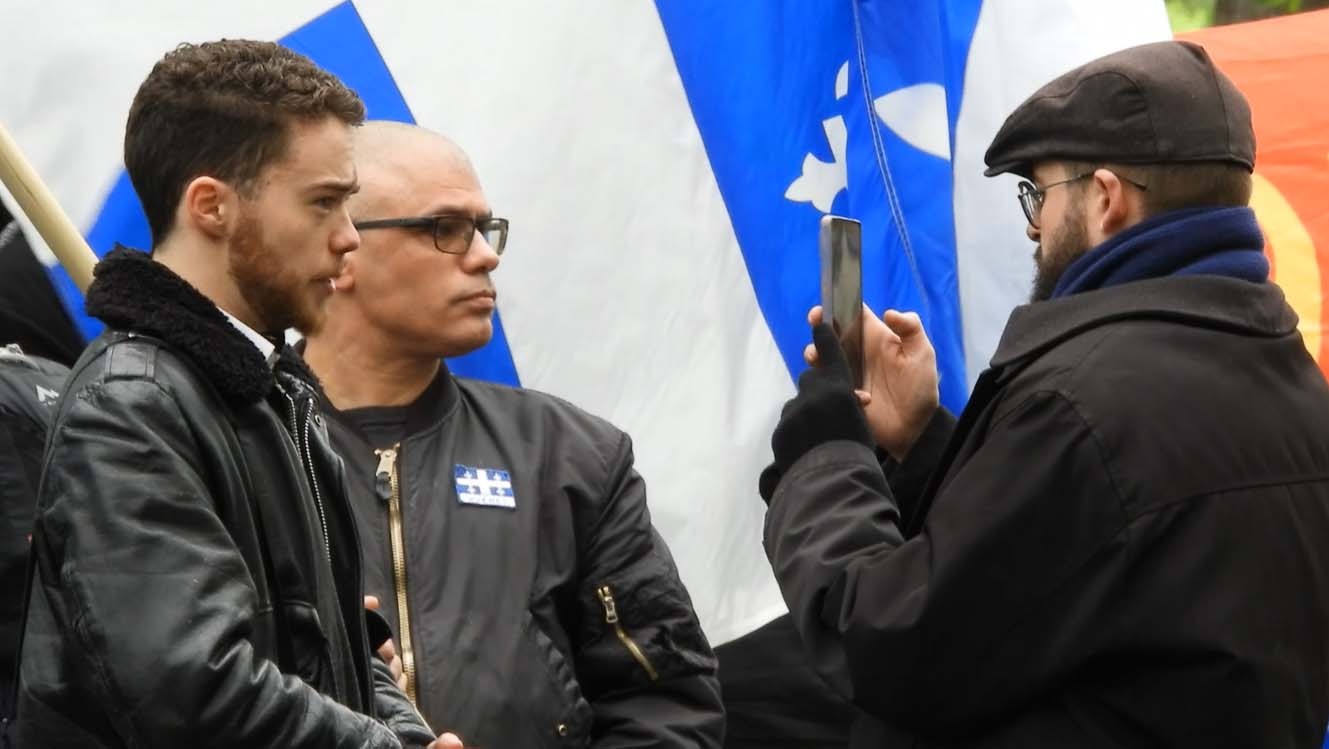
As a gateway, the “youth” organization Nouvelle Alliance (NA) represents the identitarian nationalist/ethnic faction of Québec’s far right. It regularly pushes the limits of what is acceptable, with repeated references to “migration overload” and other euphemisms or dog whistles that implicitly echo the “great replacement” conspiracy theory, as well as openly advocating for a national priority (or “preference”) based on the defense of the interests of the historical French-Canadian majority, projecting in its propaganda a retrofuturistic image of an idealized independent Québec, where this majority will be able to impose its cultural will and, above all, its ethnodemographic dominance unchallenged. In this context, immigration is de facto presented as a threat to the survival of the French-Canadian nation.
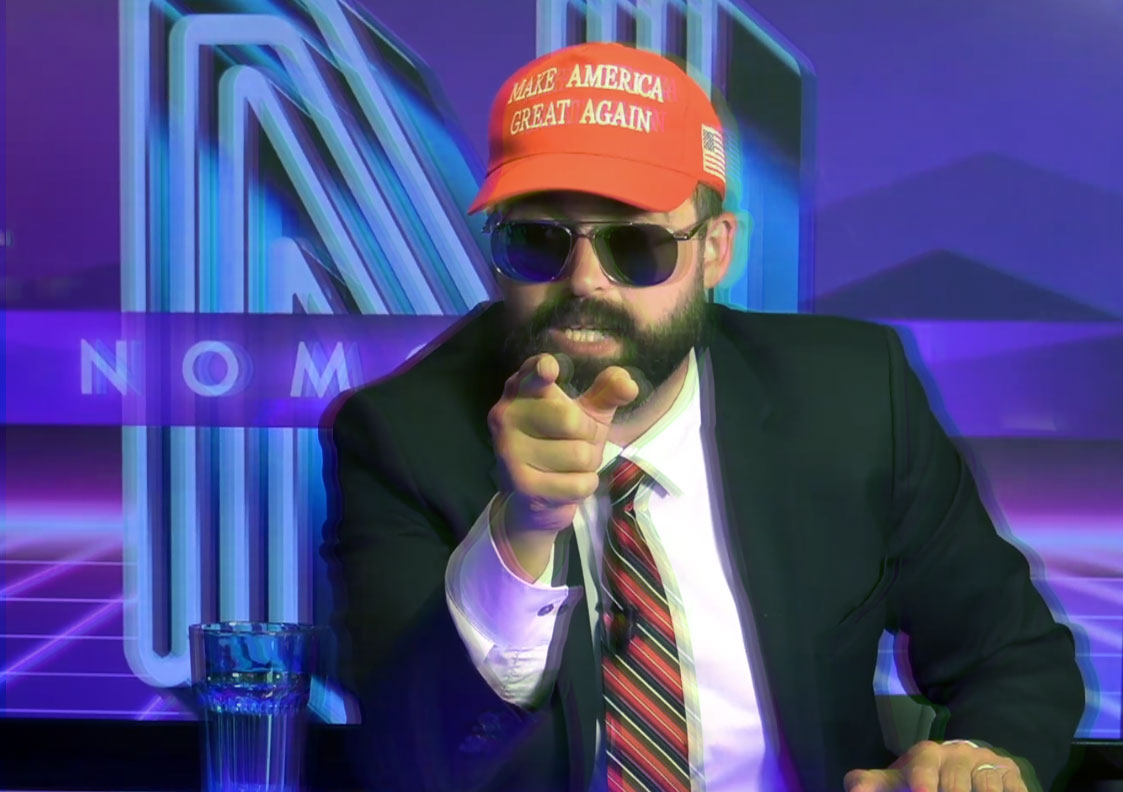
Central to this tendency is the “alternative news” project Nomos-TV and the online community that has formed around its main hosts. Proudly ethnonationalist and very often openly racist (see the Montréal Antifasciste article exposing the violent language used in its private forum), the Nomos project serves, in a certain sense, as a conduit between the various factions of the local far right. Its primary host, Alexandre Cormier-Denis (ACD) (see the article Montréal Antifasciste dedicated to him and more information about him below), is undoubtedly an heir to the neofascist tradition that, since the 1970s, has worked to culturally rehabilitate historical far-right themes. This tradition adopts a so-called “metapolitical” approach, ironically, influenced by Gramsci, with a view to eventually seizing political power. This is precisely the dynamic we have been witnessing at an accelerated rate for several years now in Europe, the United States, and increasingly in Canada and Québec as well.
There is also a whole constellation of influencers, “alternative” media outlets, and lesser-known podcasters who are carving out a place for themselves in this ecosystem and constantly feeding into Islamophobic, xenophobic, and transphobic echo chambers. The combined influence of all of these actors is helping to significantly expand the far-right sphere, amplifying the voices of its most strident proponents and driving this movement forward to the point where many claim they are winning the “battle of ideas” against the left.
There is a whole constellation of influencers, “alternative” media outlets, and lesser-known podcasters who are…helping to significantly expand the far-right sphere, amplifying the voices of its most strident proponents and driving this movement forward to the point where many claim they are winning the “battle of ideas” against the left.
Coming full circle, based on a cynical calculation, some politicians no longer hesitate to court the segment of the electorate that is influenced by the far right. This is particularly true of Paul Saint-Pierre Plamondon, leader of the Parti Québécois (PQ), which stands poised to form the next Québec government, who agreed to a Rebel News interview in April (more on this below). According to Québec political analyst Michel David, even former members of the National Assembly and ministers from his own party are quietly concerned that their leader maintains a troubling ideological closeness to recognized far-right figures.
Finally, on the fringes of this toxic ecosystem, we find groups like the Frontenac Active Club (FAC), which openly espouses white supremacy and shamelessly revels in neo-Nazi ideology. The Active Clubs, like the White Lives Matter network that preceded them, as well as the entire constellation of Canadian “nationalist” groupuscules, e.g., Second Sons, Diagolon, and the Loyalist Pioneers, clearly fit into a continuum of North American neo-Nazism. (The Patriot Front provides a parallel example in the US.) These groups combine bonehead codes (white nationalism 1) with those of the alt-right (white nationalism 2) and certain elements of the European identitarianism that is linked to the so-called “revolutionary nationalist” tradition.
As this brief introduction suggests, precision and distinctions matter, and as anti-fascist activists committed to convincing as many people as possible of the reality of the danger, we would not be doing ourselves any favors by oversimplifying a complex reality or by lumping all these different actors together in an unnuanced way. In our view, it is counterproductive, for example, to label a conservative nationalist a “Nazi” as a shorthand, because this does not correspond to reality and risks blunting the semantic force of both concepts, as well as undermining the impact of our actions. Therefore, we encourage anti-fascists to be discerning and precise when discussing the far-right ecosystem.
What follows is an overview of the current militant far right in Québec, as well as an analysis of the various manifestations and repercussions of far-right themes in mainstream political circles, media commentary, and the online ideological and propaganda ecosystem.
An Assessment of the Coalition Avenir Québec and Nationalist Rhetoric
The shift toward identitarian politics among a segment of Québec’s political class is nothing new. The pro-independence movement began moving in an identitarian direction immediately following the defeat of the 1995 referendum on independence, a trend that accelerated in the 2000s with the “reasonable accommodation” crisis, stoked for electoral gains by Mario Dumont and the Action démocratique du Québec (ADQ), and which continued with the “Québec Charter of Values” initiative led by Bernard Drainville, then a minister in the Parti Québécois government, now a leading figure in the Coalition Avenir Québec (CAQ). This shift from a more civic nationalism (“anyone who lives in Québec is a Québécois”) to a primarily ethnic nationalism (“we,” the majority of French-Canadian origin, versus “them,” the minorities) was confirmed with the victory of the CAQ and the implementation of its legislative agenda, which intentionally undermined a number of established rights and freedoms.
Courting the far right, the CAQ brought the demands of anti-migrant and Islamophobic groups into government, lowering immigration thresholds and manufacturing panic over Québec’s “integration capacity,” demagogically insisting on the risks immigration allegedly poses to Québec’s social cohesion and identity, introducing new integration requirements, and targeting religious minorities, particularly Muslims, under the guise of a distorted and grossly instrumentalized form of secularism with Bill 21, followed by Bill 94. For the government, every problem is seen to have a single cause: immigration. The housing crisis: immigration. Problems in schools: immigration. Sexism in Québec society: immigration. Whatever it is: immigration. Is it any wonder that during the recent party leadership race Bernard Drainville openly referred to the “national preference,” a discriminatory concept lifted straight from the French far-right playbook? And then we have the ongoing neoliberal dismantling of social supports and the CAQ’s increasingly unabashed use of authoritarian tactics to impose its rancid agenda, particularly the repeated and aggressive use of the notwithstanding clause, which allows it to override the Canadian Bill of Rights.
With the support of certain mainstream media outlets, the CAQ has succeeded in making the issue of identity so central that it now often takes precedence over fundamental economic issues and largely determines the tone of debates and the direction of the parties as the next election cycle approaches. Québec’s political class in 2026 is caught up in a race to the bottom, namely, who will be the most nationalist and, among the nationalists, who will be the most reactionary. This debate completely overshadows a large number of issues of major importance for the future of the nation in question.
Of all the politicians involved in this race to the bottom, the leader of the Parti Québécois (PQ), Paul Saint-Pierre-Plamondon (PSPP), is perhaps the least subtle and the most irritating. He, who just a few years before taking the party’s helm was still extolling the virtues of openness and inclusion, has done a complete about-face and in his thirst for power is now openly courting the far-right vote. He knew exactly what he was doing when he granted an in-depth interview to Rebel News and, a few days later, when he answered a question from Léo Dupire, the spokesperson for Québec Fier (a close associate of the Parti conservateur du Québec), during a town hall hosted by the Zionist organization the Centre for Israel and Jewish Affairs (CIJA), squawking about the threat that “brotherhoodism” (in reference to Egypt’s Muslim Brotherhood) poses to Québec. This delusion is straight out of the European far-right playbook. PSPP’s recent positions and increasingly strident rhetoric betray his intention to scrape together votes from disillusioned right-wingers for whom the CAQ has not gone far enough on anti-immigration policies, Islamophobia, and all-out anti-wokeness. The PQ continues to promise a referendum on independence during its first term if elected. One has to wonder what a sovereign Québec would look like under this leadership.
As for Éric Duhaime’s Parti conservateur du Québec (PCQ)—the only party that the mainstream media regularly describes as “right-wing”—it appears that after cracking down on the nationalist faction within its own ranks, it is now working to challenge the CAQ’s “autonomist” line by focussing on consolidating and expanding its “libertarian” base, rather than engaging openly in an identitarian bidding war.
In any case, the upcoming election cycle seems guaranteed to be an unparalleled shitshow, from which the far right is likely to emerge stronger—at the very least in terms of visibility and the hearts and minds battle being waged by its leading ideologues.
Nouvelle Alliance and Company
In May 2024, we described Nouvelle Alliance as a “separatist, ultranationalist political organization” whose founders were former members of the “now defunct” groupuscule the Front canadien-français (FCF), “a faithful emulator of Québec’s fascist ultra-Catholic circles.”
In the same article we wrote:
“a quick examination of their social media platforms . . . reveals a very large number of sympathizers (groups and individuals) identified with the far right, displaying, for example, symbols of fascism, European identitarian currents, ultranationalism or white nationalism, the alt-right, etc.”
Although it remains a presence in Québec, Nouvelle Alliance has not experienced significant growth over the past three years, and it appears to be more or less stable at around fifty members and close supporters. Its leadership has, however, worked very hard to develop a coherent platform and to strengthen the group’s base of support.
Once or twice a year, NA launches a recruitment campaign, which largely takes the form of putting up posters in a number of cities, mostly around CEGEPs (state-funded community colleges that provide two-year pre-University programs and three-year trade and professional programs) and universities. Since anti-fascist groups have organized in opposition to NA in recent years, these posters never stay up for very long and are only useful to the organization insofar as photos of its activists “in action” can be shared online.
An Increasingly Unapologetic Alignment with the Right
Presented at its founding as a sort of Frankenstein’s monster of a coalition of separatists from across the political spectrum (“neither right nor left but nationalist”), Nouvelle Alliance gradually abandoned this stance, finally admitting in 2025 on a far-right podcast that this was merely a façade, and that NA was, in fact, positioned on the far right of the political spectrum.
In the same vein, its leader François Gervais gave a very lengthy interview to the magazine Le Harfang for the final issue of this propaganda organ of the now-defunct Fédération des Québécois de souche (FQS). It should be noted that the FQS was founded in 2007 by neo-Nazis and later rebranded itself as an umbrella group for all factions of the far right in Québec.
Nouvelle Alliance organized a public event at the office of Société Saint-Jean Baptiste in Trois-Rivières in September 2025, featuring guest speakers David Leroux, an illiberal essayist and avowed admirer of Carl Schmitt and Julius Evola particularly concerned with rehabilitating the term “fascism,” and François Dumas, who in the 1990s led the Cercle Jeune Nation, a far-right think tank inspired by the French Nouvelle Droite that has served as a model for both the Fédération des Québécois de souche and the current generation of ethnonationalist fascists.
The Sovereigntist Cordon Sanitaire
The various factors mentioned above undoubtedly played a key role in precipitating NA’s isolation within the sovereigntist movement. Its increasingly overt far-right positions, combined with its leader’s (or, by extension, its executive committee’s) obvious ideological rigidity, as well as the efforts of anti-fascists, have led to a number of doors slamming in NA’s face.
- On May 19, 2025, activists from Nouvelle Alliance were prevented from gathering for their Journée des patriotes rally at the Dollard des Ormeaux statue in Lafontaine Park in Montréal. Beginning early in the morning, a “People’s Festival against Fascism,” organized by an ad hoc group that would soon come together under the banner of the Front antifasciste populaire, drew more than three hundred people and occupied the area all morning.
- That same afternoon, OUI Québec and the Société Saint-Jean-Baptiste informed NA that its contingent would not be welcome at the traditional parade marking the day. The fifty or so NA members and supporters tried to join it anyway but were prevented from doing so by an impromptu anti-fascist security detail, after which they were kept at a distance by the police.
- On September 20, 2025, NA made another attempt, this time announcing a demonstration beginning at the Jeanne d’Arc statue in Québec City. To no avail, as the fifty or so activists and supporters were surrounded and besieged by approximately two hundred left-wing sovereigntists and anti-fascists. NA was blocked and never left its starting point, and its members were forced to beat a retreat.
- On October 25, 2025, NA was again clearly excluded when OUI Québec organized a demonstration to celebrate the thirtieth anniversary of the 1995 independence referendum. This time, the official call to demonstrate stated: “In accordance with Québec’s fundamental values—gender equality, secularism, and civic nationalism—we affirm that individuals affiliated with ethnic nationalist, religious fundamentalist, royalist, or misogynist organizations will not be welcome at the activities or on governing bodies of the Société Saint-Jean-Baptiste de Montréal or OUI Québec.”
- Following this series of setbacks to their mobilizing efforts, in March 2026, NA retreated to the suburb of Beloeil, forty miles from Montréal, to launch its new magazine Le Franc-Renard. This “public” event was held under tight security, with attendees required to register and provide their name and phone number and even some form of ID! Unfortunately for them, anti-fascists located the venue, and the restaurant owner kicked them out when he was informed of the true nature of the event.
- On May 18, 2026, approximately fifty NA members and supporters once again gathered at the Dollard des Ormeaux statue for their annual Journée des patriotes celebration. This time they were met by a gathering of around two hundred anti-fascists, who held a very noisy party about twenty-five yards from the NA gathering, effectively drowning out and silencing the NA speeches. It was only with a heavy police escort that NA was able to leave the park and tag along behind the Société Saint-Jean-Baptiste parade, separated from the main body by a small detail of police on bikes.
Action Socialiste de Libération Nationale and Billy Savoie
When it moved to the far right, NA needed a “left wing” to save face and maintain its false “neither-nor” posture. In 2025, the organization began to show signs of a rapprochement with the Action socialiste de libération nationale (ASLN). This is the former Parti communiste du Québec (PCQ), which has been taken over in an ideological coup led by two individuals, Sébastien Paquette and the now infamous Billy Savoie. Embarking on a more or less overt shift toward National Bolshevism, these two “brown shirts” (that is the colour they chose for their cringe-worthy scout uniform, adorned with a logo combining Québec’s national symbol, the fleur-de-lis, and an AK-47 assault rifle) took control of the organization and expelled all dissenting voices.
In May 2025, NA and the ASLN organized a “leaders’ debate,” at which, as it ends up, not much was actually debated, since the “leaders” found themselves in broad agreement on all the issues. Rumour spread that the two groups were considering a merger, but the merger never took place. The two groups did, however, join forces in a single contingent in several of the failed actions detailed above.
Following the autumn 2025 publication of our report on Billy Savoie using his position as a high school teacher to propagate his far-right ideology among his students, he was suspended pending the results of an investigation. After being briefly reinstated, the school terminated his employment following a “repeat offense on his part,” a major setback that has not prevented him from continuing his career as a solo hate influencer on social media.
Photo Credits:
Photos provided by Montréal Antifasciste.