By Dandy Andy
What Happened?
At approximately 11:35 am, on Monday, June 22, police received a call about a man pointing a long gun from the window of the Hilton Garden Inn Montreal Midtown hotel on the corner of Décarie Boulevard and de Courtrai Avenue in Montréal’s Côte-des-Neiges neighbourhood. When police arrived, a firefight ensued that left one thirty-four-year-old police officer, Mohamed Lamine Benredouane, dead and an unnamed female officer critically injured but expected to survive. Initial reports claimed that a police officer shot to death a bystander, the owner of a nearby business, sixty-eight-year-old Michel Mizrahi, mistaking him for a second shooter; however, the subsequent autopsy suggests that Mizrahi, who died at the scene, was killed by the shooter.
It wasn’t long before the shooter, who was killed by police, was identified as Seth Hatfield, a twenty-five-year-old philosophy student from Lethbridge, Alberta, who was soon linked to an incel manifesto posted online, with the prosaic title Manifesto of June 22nd. On the basis of the manifesto’s content, it was soon concluded that Hatfield’s target had been the nearby Aylo headquarters, the parent company of Pornhub, YouPorn, RedTube and of the Brazzers studio and various adult gaming platforms, a contention supported in the media by photos of the windows shot out of the Aylo offices. It is important to note that while this is a reasonable supposition, there is no mention of Aylo or its subsidiaries in the manifesto, although pornography companies in general are mentioned as legitimate targets.
The Context Created
Given that Hatfield’s manifesto is sophomoric, turgid in the extreme, largely constructed around an extremely misogynist monomania, and whiny at that, why not simply ignore it? That would be the logical response if mainstream pundits and “experts” hadn’t been tripping over each other to provide an analysis in the days following the shooting. In general, these analyses succeeded only in muddying the issues at play and creating a false right-left equivalency. As this served to make Hatfield and his manifesto a public phenomenon with its very own heavily footnoted Wikipedia page referencing dozens of articles, it behooves us to look at the actual content of the manifesto, which has been largely overlooked in all of the many commentaries to date.
The questions that always arise when writing about a far-right shooter are: Should he be named? Is that playing into his desire to gain some sort of fame or notoriety? Will it encourage copycats?
All valid questions, but given that this event has been so heavily mediatized and dissected, it almost seems coy not to name him—when any reader will likely already know his name, and if they don’t, they can google that information in a matter of seconds. A parallel question arises as to whether the document should be as heavily quoted as is the case here. Again, a valid question. However, given that I was fairly effortlessly in possession of this manifesto on the day of the shooting before the shelter-in-place order had even been lifted, I am sure that people on the far right had little difficulty in accessing it, and it is now circulating freely in those milieus, and discussing what it says without the quotes would do little service to the reader.
How to Miss the Point
Very quickly, far too quickly, in fact, the pundits and “experts” were there with their analyses, most of which proved to be superficial, if not flat out problematic. Let’s do a quick rundown. On June 23, Stephanie Carvin, described as “an associate professor at Carleton University, a former national security analyst, and author of a book on far-right extremism,” describes Hatfield’s manifesto as ideologically inconsistent, combining “elements from both far-left and far-right ideologies,” noting, as does every commentator: “If there is a continuing thread throughout the manifesto…it is anti-women.” The next day, June 24, Carvin makes another appearance in an article by Linda Gyulai titled “‘Salad Bar Extremism’: Montreal Gunman’s Incel Manifesto ‘Picks and Chooses Different Grievances.’” What is interesting here is the title, specifically the concept “salad bar extremism,” which is not a term that Carver uses. The phrase is problematic for two reasons: first, it suggests a series of ideas assembled incoherently and almost by happenstance; second, it provides a buzz phrase that appears to sum the whole issue up, such that no further thought is necessary.
This idea of incoherence forms the core of the analyses of the various “experts” in think tanks and academic settings. David Hofmann, an associate sociology professor at the University of New Brunswick, tells us the Hatfield’s manifesto is “typical of the ‘buffet extremism’ common for lone actors.” We are told that Dr. Ghayda Hassan, a clinical psychologist and director of the Canadian Practitioners Network for the Prevention of Radicalization and Extremist Violence, “agreed with Hofmann’s ‘buffet extremism’ characterization.” The same day, Tandeep Sidhu, an assistant professor at the Department of Sociology and Criminology at the University of Manitoba, tells us that the shooting is “senseless,” implying that there was no obvious reasoning behind Hatfield’s attack, going on to add that the shooting is part of “a longstanding history of violence perpetrated by radicalized young men whose motivations have varied across a range of different grievances,” without looking at what Hatfield’s expressed grievances actually were. On June 30, Karmvir K. Padda, a researcher and postdoctoral fellow in sociology at the University of Waterloo, chimes in with an article titled “The Montréal Shooter’s Manifesto Isn’t Left or Right—It’s Rooted in Misogyny,” telling us that “the Montréal text is a tidy example of what researchers call mixed, unclear and unstable ideologies, hybrid extremism or ‘salad-bar’ extremism,” adding “a lone attacker builds a world view the way you build a plate at a buffet—a bit of racism here, some antisemitism there, a scoop of anti-government conspiracy; whatever fits his grievance. It doesn’t hold together as a doctrine.” Particularly odd here is the idea that “a bit of racism here, some antisemitism there, a scoop of anti-government conspiracy” is “neither left nor right.”
One of the things underlying the tendency to portray Hatfield’s manifesto as a confused hodgepodge that “isn’t left or right” is his heavy but distorted use of Marxism.
The Left Takes a Kick at the Can
Analysts approaching the Hatfield’s action and manifesto from the left, while showing greater subtlety, even sometimes recognizing the broader background against which Hatfield was acting, also failed to adequately engage the bigger picture. For example, left-wing investigative journalist Nora Lereto argues in a June 23 post on her blog, “Hatfield represents the maturing of incel ideology as it’s been remixed over a decade of declining social conditions.” While this observation provides a starting point for an attempt to place Hatfield’s action and manifesto into a broader framework, Lareto stops short, writing Hatfield off as “confused as hell,” echoing the idea that there is no coherence to his thinking.
On July 7, Le Devoir published an opinion piece with nineteen signatories, most but not all teaching or studying at the Université du Québec à Montréal (UQAM). The immediate strength of this document is that it places the attack in a broader social context: “Let’s get right to it: this attack is not an isolated incident, an aberration that came out of nowhere. It is part of what the sociology of social movements calls a ‘counter-movement’: an organized, sustained, and structured reaction to the advances of feminist movements and movements representing sexual and gender minorities,” adding, “Whether they are incels, MGTOW [Men Going Their Own Way], pickup artists, or others, these men are all united by a common goal: male supremacy. Their only common thread is a deep-seated hatred of women, feminists, and LGBTQ+ people—to which they may add others (immigrants, Jews, Muslims, the bourgeoisie, etc.). This misogyny is the ‘symbolic glue’ that binds disparate resentments into a violent worldview.” This was the first document I saw that placed Hatfield’s attack within an ideologically structured movement rather than treating it as the action of a man acting on the basis of a chaotically assembled ideology all his own. Similarly, in Pivot, Montréal’s premier left-wing news and analysis website, Maxime Laprise argues that “the violent misogynist portrays himself as the victim of structural misandry, in which men are allegedly despised and marginalized. This stance is not limited to a few far-right fanatics; it is expressed in the mainstream media by writers considered reputable.” He goes on to criticize the major media for failing to “offer an explanation, portraying the shooter’s manifesto as a contradictory jumble of delusions that, in the end, doesn’t really say much.” While both the Le Devoir article and Laprise challenge the prevailing idea that the Hatfield’s manifesto is nothing more than “a contradictory jumble of delusions,” neither of them take the next step of analyzing the actual nature of the manifesto.
Is It Marxism Just Because You Quote Marx?
One of the things underlying the tendency to portray Hatfield’s manifesto as a confused hodgepodge that “isn’t left or right” is his heavy but distorted use of Marxism. This is perhaps a good place to start looking at what it is that the manifesto actually says. To begin with, Hatfield declares that “hypergamy,” not the productive system, is the main factor determining the fundamental nature of a society. Hatfield defines hypergamy as “a phenomenon in which females simply copulate as they please with a plethora of attractive males, as opposed to monogamy, in which the same females would be bound legalistically and culturally to just one male” (11). As he sees it, “feminism was allowed to flourish, and was directly promoted, while bourgeois businessmen gladly allowed women to enter the workforce, and thereby to contribute in massive numbers to the expansion of the power of bourgeois industries; and also to obtain their own salaries, with which they could consume countless products and stimulate the economy further” (17). This is the springboard that takes us to the fundamentally misogynist core of Hatfield’s thinking: “Having then obtained the means of generating their own salaries…women simply no longer wanted, or even needed common men as much as they once did; and monogamy thereby plummeted in frequency, with women overwhelmingly preferring to work for corporations while earning money and engaging in hypergamy, as opposed to working for common husbands, who did not pay them money, and who expected monogamy” (18).
Having replaced the productive system as the motor force of capitalism with hypergamy, Hatfield takes the next step and makes the bourgeoisie largely interchangeable with the so-called “favoured males,” defined as “attractive males,” with “attractive” characterized as “a handsome, masculine face; a tall height; a healthy build; and Caucasian or Caucasian-looking features” (23), this latter feature hinting at the white supremacy that forms an element of Hatfield’s worldview. These favoured males are, we are told, a “sociobiological class that has found itself thriving the most out of any within the hypergamy state. They are much less numerous than the females and the common males [sometimes referred to as ‘the dispossessed’], and many of them actually also belong to the bourgeois and middle classes” (21).
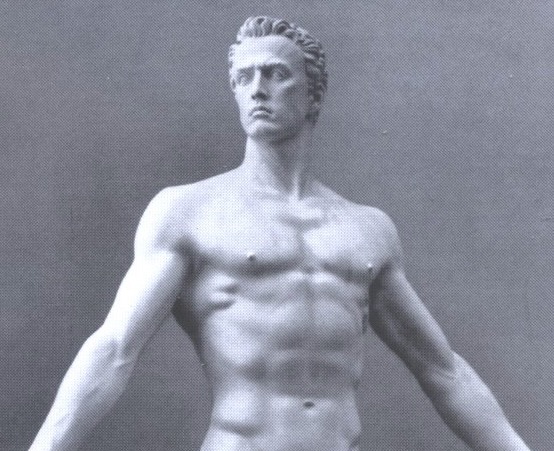
These favoured males not only profit financially from their good looks but, and for Hatfield this is the core issue, “live a life of abundant intimacy, which is given very passionately to them, as it originates from a place of genuine biological desire on the part of the females, who consciously or not, wish to reproduce with them. The favoured male is desired by females due to his physical appearance, which signals good genetics (or biological value), and thereby the female desires him for mating infinitely more than she does other males, whose appearances do not signal the same high level of biological value” (23). This has to do with Hatfield’s eugenic thesis that there is an immediate connection between perceived attractiveness and genetic superiority, an idea that resonates with the Nazi idea of the pure Aryan.
Consistently, Hatfield replaces the economic class structure of society with one based on male attractiveness: “regarding the female inhabitants of the hypergamy state, some may contend that they are actually better off than the favoured males are, but I do not think this is so; and my view is that while the females are indeed vastly better off than the common males, they consistently do not quite ascend the favoured males…in the overall level of power and abundance that they obtain, and ultimately it is indeed the favoured males who typically face the least problems within western society” (24). He elaborates: “intimacy is being distributed in an unequal manner, as the females are quite simply only dispensing it to a select clique of males: the favoured, while the rest of the males, who are not perceived by females as having any significant biological value, are largely socially ignored outright.” Hammering his point home, Hatfield asserts that “the majority of human males who are alive today, or were living at any given time, are and were in fact common males” (5). He thereby creates a class structure in which the working class at the core of Marxist analysis is replaced by the “common male.” In this light, Hatfield argues that it is “the dispossessed males, who overwhelmingly are the ones being overworked in warehouses, construction sites, factories, and other such proletarian workplaces; they are objectively the ones who hold up all of society” (45).
Hatfield replaces the economic class structure of society with one based on male attractiveness… He…creates a class structure in which the working class at the core of Marxist analysis is replaced by the “common male.”
Just as he restructures the essence of a Marxist class analysis, Hatfield recasts a left-wing analysis of the enormous chaos that neoliberal and technocratic capitalism has created to suit his theory, holding women responsible for the widespread social chaos that we are currently experiencing. “Despite all of the negative things which afflict women in the west, it remains true that they consistently and firmly advocate tooth and nail against any sentiments that overtly go against the total dominance of hypergamy, which is…the very mode of intimacy that allows for so much brutality and chaos to exist within the social lives of young people today” (26–27).
Several writers have noted Hatfield’s distortion of Marx without really delving into it. When Louise-Maude Rioux Soucy argues, “There is nothing rational about the mindset of a killer who shoots indiscriminately at both left and right, denouncing capitalism and pornography alike, all while calling for enforced monogamy and discussing essentialism. There is a term for this kind of intellectual slop: ‘red-brown,’” she makes two mistakes. First, she joins the chorus of those claiming that Hatfield’s thinking lacks coherence, and she mischaracterizes his politics as “red-brown.” This assignation is neither accurate nor useful. Red-brown ideology generally combines a Marxist economic analysis with fascist or fascist-leaning ideology that is intensely and narrowly nationalist in nature. Hatfield does neither. His use of Marxism substitutes a particular analysis of interpersonal relations for economic analysis, and his thinking is not only devoid of nationalist tendencies, but he belabours the need for internationalism and permanent revolution, the one area where his thinking is most clearly in line with classic Marxism. “[O]ur position is internationalism, and this entails a global revolution, and a global change in the order of things.… Since we don’t plan on letting the hypergamy state reappear, our revolution is also to be a permanent one, which will continue to play out even after the seizure of power” (99).
On September 28, in an article on the French-language CBC site, Jeff Yates asserts that “in the document, the suspect advances Marxist arguments, not to correct social inequalities, to call for the seizure of the means of production, or to help the homeless. His goal is not to redistribute wealth, but to redistribute women.” He further writes: “The manifesto we obtained is clear in its intent. Its author lays out an entire revolutionary ideology, backed by a bibliography and footnotes. It contains all sorts of ideological rants, ranging from anti-Semitic theories to hatred of transgender people, but the cornerstone of it all is hatred of women.” While Yates stands apart here in recognizing that Hatfield has an “entire revolutionary ideology” that is cohesive and carefully constructed, he fails to go beyond a couple of throwaway remarks about what its constituent elements are. More problematically, however, he appears to accept the idea that Hatfield’s use of Marx is a legitimate expression of Marxism.
Nora Lareto notes in her previously mentioned June 23 parsing of the manifesto, “Anyone who has read Marx and Engels knows that neither man advocated for the subjugation of women and forcing them into private, unpaid home work.” She also notes the centrality of the substitution of “hypergamy” for economic analysis in Hatfield’s thinking. Like most other analysts, however, Loreto fails to engage the web of far-right politics that underlies Hatfield’s thinking.
A July 2 opinion piece by Emilie Nicolas presents perhaps the most far-reaching challenge to the legitimacy of Hatfield’s use of Marxism and one of the most sophisticated attempts to contextualize incel misogyny. “The Lethbridge killer also viewed women as capital, just like livestock or bales of cotton. It is no more Marxist to demand that poor men have more women than it would have been Marxist in the mid-nineteenth century for a landless white man to demand his share of African slaves, serfs, muzhiks, or workers. Marxism, at its core, denounces the economic exploitation of workers.” To which she adds, “When you demand that a woman fulfill all your emotional needs, isn’t it because you can’t find emotional security with other men? Perhaps you’ve experienced intimidation, competition, and humiliation based on your respective ‘assets’—including money and women as objects of desire. The incel movement seems to be rooted in a pessimism toward men’s emotional capacities that is far more radical than that of most forms of feminism. Which leads me to ask you whether you’re less interested in women for their own sake than as a means to gain the esteem of other men.”
There can be no doubt that the fundamental element of Hatfield’s thinking is a breathtaking misogyny. After all, he writes, “After the publication of this manifesto, I think it is very possible that some girls…may read this. All I have to say to such people directly is: ‘The fact that you are free is not your achievement, but rather a failure on our side’” (48). Nonetheless, it would be an error to stop there and not look at the other components of the ideology he has crafted.
It is a carefully constructed fascist manifesto that addresses virtually all of the key tropes of modern far-right ideology… Much as he reworked Marxism to suit his theory, he has displaced the aggressive ethnonationalism that normally forms the core of fascist thinking with a vicious misogyny.
A Buffet of Far-Right Ideas
If we’re going to use the buffet metaphor, then this buffet has a carefully organized menu of dishes for every far-right palate.
It should come as no surprise that Hatfield is a transphobe, something he establishes early in his manifesto: “[M]any western academics of the liberal or bourgeois persuasion,… hold to the absurd and recent fabrication that there exists some difference between biological sex and gender. They proclaim that while sex does indeed exist, gender somehow exists separately from it, and that gender, i.e. male and female, is a mere ‘social construct’, which can be changed on a whim by anyone, and for any reason. The reality however is the utter opposite of what they say, and it is objectively the case that there is no difference between biological sex and gender, and that gender/sex are words that have been applied by humans to a material construct, that exists as matter, and is derived from complex natural processes which began unfolding long before the appearance of the first humans” (3n6).
Later in the document, Hatfield drops the pseudoscientific rhetoric and throws his lot in with the most aggressive far-right positioning on the issue, writing: “Some dispossessed males are afflicted by a certain pathology which is becoming more widespread, specifically within western nations; namely this is the mental illness which is characterized by the delusional belief that one is actually not of the sex which they objectively are. A great number of these cases end in odious self-mutilation and suicide” (33). In a footnote attached to this passage, he works in a negative appraisal of immigration, writing: “The bourgeois class does not have to worry about how such a disease may lower birthrates, since as we have seen, at any time that they wish, they can simply important [sic] obscenely large numbers of immigrants in order to keep their enterprises growing” (33n5).
The “obscenely large numbers of immigrants” mentioned in passing in this passage is not an anomaly. Earlier in the document Hatfield writes, “Since birthrates had plummeted, the bourgeois class needed a way to keep the population of western nations growing; and also to obtain more cheap labour… Of course, the bourgeois class was not about to bring back monogamy in order to lift the birthrates back up—as that would mean ending an incredibly profitable arrangement—so instead, they opted for the cheaper solution, which was to begin the practice of merely importing continual and ceaseless waves of immigrants from the global south into western countries” (18). In a footnote connected to this passage he opines, “This is the true origin of the phenomenon of senseless mass immigration into western nations” (18n25). Toward the end of the document he asserts that “the CEOs and other leading figures of corporations that are most directly responsible for, or most greatly profiting from, the insane and inordinate mass immigration from various countries into the west” are legitimate targets for assassination (87).
“Obscenely large numbers of immigrants,” “continual and ceaseless waves of immigrants from the global south,” “senseless mass immigration,” “insane and inordinate mass immigration”: these are all standard far-right dog whistles that brush up against great replacement rhetoric. Ultimately Hatfield ties his attacks on both trans people and migrants to his central grievance, arguing that “the leftists partially or entirely reject the validity of bourgeois economics, i.e. capitalism, but they love the degeneracy that capitalism produces, i.e. obscene levels of mass immigration, rampant hypergamy, the encouragement and promotion of hedonistic bodily mutilation, et cetera (my italics) (72).
We have already noted that in his definition of the attractive male as “Caucasian or Caucasian-looking,” Hatfield drifts into white supremacist territory, and this is not his only foray. His attack on “rap music” is a barely disguised attack on Black culture that is replete with racist stereotypes and seething hatred. “Rap,” we are informed “is literally the cultural quintessence of the hypergamy state, congealed into a musical form. It is vile, repulsive, foul, and hideous in every way.” He goes on to argue, “the despicable ‘musicians’ and other people behind the propagation of rap should be some of the first ones that we liquidate” (79). He provides the following description of those to be liquidated: “Gaudy jewelry, backwards snapbacks, designer clothes, all are often the standard uniform for them” (89). This describes literally millions of young Black men.
No far-right manifesto would be complete without at least a sprinkling of antisemitism, and Hatfield does not disappoint. He devotes one of the longer footnotes in the manifesto to Jews and Zionism. In it he writes “The influence of Zionist Jews upon the western bourgeoisie is in fact so strong that in my other works I sometimes refer to the western ruling class itself as the Judaeo-bourgeois class.” That said, he also argues that “the true heart of the bourgeoisie is capital, and not the Jewish race; and it is still the case that a vast portion of the western bourgeois class is not Jewish at all, but is composed of people from a wide range of ethnicities, who would still be vile and corrupted without any Jewish influence” (15–16n20). Nonetheless, from his point of view, that ‘Jewish influence’ is integral, and his list of accepted targets includes “influential Zionists” and, as a result, “the headquarters of all corporations with ties to Zionism are fair game: IBM, Microsoft, Boeing, etc.” (86). This is the typically slippery antisemitism that can be found across the political spectrum, including on the left, one that conflates Jewishness with capitalism and then refocuses on Zionism, effectively making Zionism a stand-in for Jewishness in general. It is particularly problematic because it serves to block legitimate criticism of Zionism.
As is generally the case, these typical elements of far-right ideology are nested in an overall demand for a return to the alleged halcyon days of yore. In Hatfield’s view “the good ol’ days” were a period when “monogamy” ruled and every man owned a woman. As we shall see, the world to which he imagines returning is also very socially limited and puritanical.
Hatfield’s puritanical nature is reflected in his inordinate rage at the porn industry, which he primarily sees as part of the assault on the “common male”: “the closest thing to intimacy which [the common male] is allowed to undergo is usually the twisted and debasing experience of watching graphic internet pornography through his phone screen, in the darkness of his room, late at night” (32). He goes on to argue that “pornographic productions are utterly hideous and harmful to the mind, and should be avoided for those reasons alone, but what’s more is that they emasculate the dispossessed male quite directly, humiliating him, and causing him to pleasure himself to footage of favoured males copulating with girls. This experience vegetates the dispossessed male, softening him, and preventing him from development, while also leading him over time to increasingly depraved perversions and addiction” (76–77). As a result, Hatfield places “pornographers” among his “Class A elements” for liquidation (83), which tends to support the contention that the target of his June 22 attack was Aylo.
The Hit List
Hatfield has outlined two classes of enemies whom he sees as profiting from society’s inordinate liberal freedoms and who are prime targets for liquidation. His Class A targets encompass the real estate industry, multinational investment corporations, elite bankers, politicians and leading military figures, influential Zionists, the pornography industry, CEOs of private health insurance companies, CEOs in environmentally destructive industries, Christianity swindlers, plastic surgeons (referred to as mutilation profiteers), and CEOs profiting from mass immigration. Most interesting in his list of primary targets, and one that puts him outside the mainstream of the manosphere, is “powerful and influential swindlers who delude countless males into erroneous doctrines, especially ‘masculinity’/‘alpha male’ swindlers, ‘pick up artists’, speculation swindlers” (86–87). He even mentions Andrew Tate as an example and, presumably, potential target (66).
Hatfield’s definition of Class B targets presents another distortion of classic Marxist theory. They are, he says, “depraved members of the lumpenproletariat…. Amongst this repulsive mob is drug dealers; gangsters; pedophiles; the producers and profiteers of illegal, depraved content; sex traffickers; and other debauched scum who contribute greatly to the ongoing evils of the hypergamy state, and to the general misery of the innocent people of the public, through illegal activities” (89). This is a sort of cop show version of organized crime that is far removed from the impoverished people who make up the lumpenproletariat in Marxist analysis. Consistent with his puritanical view of the society he seeks to see instituted, Hatfield’s hatred for these people is vitriolic, expressing a rage that is absent from his assessment of Class A targets: “This eternally despicable class needs to be permanently exterminated, obliterated off the face of the earth. It is shameful that until now we have not attacked them, and yet they kill and terrorize every day, though not for any higher political or philosophical ideals, but only for their immediate sensory pleasure, monetary gain, and egoistic vanity” (90).
Talking About a Revolution
Hatfield outlines a revolutionary strategy for the overthrow of the hypergamy state in two stages, the first being the spread of something he calls “biological consciousness,” presumably his transposition of “class consciousness,” in keeping with his restructuring of Marxism, which he defines vaguely as the common male coming to understand “that his isolation is not his fault at all” (81), and the second being “the seizure of positions of power by the revolutionary vanguard, and the subsequent usage of their newfound power to carry out the liquidation of the hypergamy state” (73–74), using both legal and illegal methods, but ultimately requiring “the implementation of terror” (82).
Hatfield outlines a revolutionary strategy for the overthrow of the hypergamy state in two stages, the first being the spread of something he calls “biological consciousness”… and the second being…“the implementation of terror.”
Hatfield’s terror is, however, distinct from the random violence usually associated with incel attacks. He writes, “the terror…of the last few decades, perpetrated by Islamists and mentally insane rightists against masses of helpless and innocent people [is] not only ineffective and immoral, but [is] also despicable and cowardly… We are fighting against a different, and much more exclusive and inaccessible crowd; that is, those who themselves are most responsible for the degrading conditions of contemporary life… In a word, we war against the big, against the strong, and against the powerful” (82). Hatfield imagines this taking the form of mass murder, presenting different scenarios: “One could simply discover the date and location of some degenerate bourgeois conference, at which are gathered multitudes of culpable people; and after the arrival of the wealthiest and most influential attendants, one could detonate bombs and/or open up with a firearm to great effect.” Alternately: “You could have multiple men armed with guns and drones, with each of them quickly storming a separate locality and using their guns to liquidate hostile elements there” (84). He doesn’t limit his targets to human beings. Other potential targets include, “crucial oil and gas refineries of large western corporations; major facilities of western military manufacture; and the new AI data centres which have sprung up across the west” (87n86).
As to the mass murder of so-called Class B targets, Hatfield suggests “creat[ing] an event where multiple class B [lumpenproletarian, as he defines it] elements are gathered together in one place. To organize this, maybe you could say to one of them that you want to meet their friends, or you could even pretend to be an especially dissolute girl that wants to copulate with a large group of them in one evening. Just find a way to get all of the scum crowded together, show up, and liquidate them” (90).
While calling for mass murder, he argues against the kind of collateral damage usually associated with incel attacks. “A random CEO in your area should not be targeted purely on the grounds of him happening to be a CEO. The local real estate brokerage in your small hometown is not a valid target, just because it is an instrument of speculation. A mall is not a valid target, nor is a university or any kind of school, a store, or any other place where vulnerable, helpless, non-culpable people will be in large numbers.” In spite of his extreme misogyny, Hatfield even delimits attacks on women and on his primary enemy the favoured male: “Women, though their behaviour can be very hurtful, are generally not at fault for things… The favoured male…is on average either not a bad person, or not a bad enough person to deserve liquidation” (85). Even in the case of police, he draws a line: “With more corrupt departments—usually those of the biggest cities—I entirely condone fighting them. But for the less corrupt departments, typically of rural areas and smaller cities, I don’t think combatting them is something that should be done. Yes, they are all technically the hired guns of the bourgeois class, and they defend bourgeois interests, but they are also some of the only people out there who are putting their lives on the line to combat gangsterism and other disgusting crimes, even if their combat is rather ineffective, and only goes as far as the bourgeois class wants it to” (91). In this case, he goes as far as to recommend suicide by cop over resistance. It is here that he indicates both the self-aggrandizing and self-pitying nature of his worldview, arguing, “The only path that leads forward is that of radical action, and if this radical action entails the loss of our own lives, then so be it. It’s not like we have girlfriends to spend time with, or prosperous futures to look forward to anyways” (91–92).
One Man’s Utopia Is Everyone Else’s Dystopia
So what would Hatfield’s post-revolutionary world look like? The first steps will be to nationalize all private property, centralize banking in the hands of the state, develop a planned economy, and place transportation and communication under state control (92), the ultimate goal being to replace hypergamy with monogamy, which, as he understands it, means the right of every man to own a woman. To achieve this involves “get[ting] the female out of the workplace, and to generally stop her from having her own income. One of the ways that this can be done gradually, without using too much force, is to simply quietly start introducing robots into female workplaces, as robots will easily be able to perform the sedentary and easy jobs that females overwhelmingly prefer.” Any lingering women in the work force will “be removed from their workplaces through some legislation that can be quietly passed and enforced on ostensibly mundane pretences.” The result will be that “without an income of her own, and without unlimited access to an unlimited number of potential mates, the female will simply need marriage in order to live, just as she once did; and thus she will engage in monogamy willingly” (94–95).
Personal mobility will be extremely limited, with the private ownership of cars banned and train travel limited to “people with state approval.” The banning of cars, for which an ecological argument could easily be made, is in this case to prevent “favoured males and women to so frequently and excessively copulate with each other.” “The new state-controlled trains will mostly operate towards the enhancement of state industry and the military, but some movement will be allowed for monogamous families that wish to go on vacation, and other such innocuous instances that don’t undermine the new societal order” (95).
The means of communication, including the internet, will be brought under state control. Pornography and dating apps will be abolished, as, in all likelihood, will be social media. All data will be mined to identify “societal degenerates” who can then be “quietly be apprehended, before being judged and sentenced either to a life of forced labour, or instant death,” putting an end to the spread of “cancerous depravity.” The public will only have access to the means of communication in easily surveilled public sites, allowing the state to “locate and prosecute unauthorized internet users” (95–96). As a result, “women will no longer be able to lecherously flaunt their bodies all over the internet, and wretched men will no longer be able to worship them for it. We will create a world in which there will be no more private or public prostitution, drunkenness, indecency, poverty, crime, or fratricidal wars” (100).
To carry out this revolution, Hatfield sees the necessity for a militarized organization, which he calls the “extraordinary branch,” “composed of politically sound, biologically conscious, and incorruptibly devoted men, armed with the best weapons and technology, and trained to the point of being universal masters in the knowledge and application of state security, covert operations, and all other useful modes of warfare, including psychological and biological warfare.” This “extraordinary branch” will have “full authority in investigation, prosecution, sentencing, and punishment of both class A and class B criminal elements.” This secretive and shadowy organization will function surreptitiously “conducting liquidations by night,” with little “official information released about them,” to encourage the terror that comes from “whispers about their power and authority” among the population. Calling to mind the Nazi use of uniforms and symbols, Hatfield writes, “the combat uniforms of the branch should be both very effective, and also ominous or macabre in design, perhaps making use of peculiar colours, otherworldly patterns, and grim depictions of daemonic beings in order to strike as much fear and confusion as possible into hostile elements.” The fundamental role of this extraordinary branch will be the “purge of all the remaining powerful and potentially dangerous bourgeois elements in society” as quickly as possible, with the minimum of fanfare—“such people [should] simply be ‘disappeared’” (97–98).
When it comes to “lumpen elements,” Hatfield imagines wholesale brutality: “the extraordinary branch should first conduct a massive purging of the prisons, with anyone being held there for any crime that is even remotely vile, from drug dealing, to animal cruelty, to rape, to white collar crimes and murder, being promptly liquidated on the spot by the branch’s shock detachments. The branch will also have gained access to the police files of the old system, which will contain the most recent known whereabouts of all who were investigated for, or convicted of vile crimes, but released for whatever ridiculous reason. With knowledge of their whereabouts gained, the extraordinary branch can send shock detachments throughout the land, hunting down and destroying every last pedophile, animal abuser, gangster, swindler, black marketeer, and drug dealer” (98).
When imagining this future “extraordinary branch,” Hatfield embraces a truly fantastical technofascism. The soldiers of the extraordinary branch will not be “entirely human.” They will be a “synthesis of the best aspects of humanity and technology.… They will have their human memories, their own personalities, and their own distinguishing physical characteristics like humans normally do, but they will also be perfected mechanically, as the unbreakable guardians of the new order. Perhaps with the technology of the future, they could even be made to be resistant to the normal effects of aging, being able to live on for vast spans of time, continuing to enforce the new laws for hundreds of years or more” (98). Hatfield even imagines spreading his revolution into galaxies far, far away: “Once the whole earth is eventually brought into the new order, and technology has advanced to a sufficient point, the revolution may continue to spread beyond the earth, and into the stars” (100).
Hatfield closes his manifesto with a battle cry for violence that parallels classic fascist and Nazi paroxysms. “Let us be the initiators of a new bloodletting.” “[S]torm into the palatial workplaces, the conferences, and the dwellings of our enemies, and eradicate all of the scum that you find there. Cut them down in the midst of their vile, hedonistic lives of pleasure, and let them drown in pools of their own blood.” Finally, he concludes with a one-sentence stand-alone paragraph: “Be unflinching, go forth, and KILL THEM ALL!” (104).
Conclusion
There are many adjectives that one could attach to this document; repugnant, horrifying, chilling all leap to mind. This manifesto isn’t, however, “salad bar” or “buffet extremism.” It isn’t “senseless.” It isn’t “confused as hell.” It isn’t “a contradictory jumble of delusions.” It is a carefully constructed fascist manifesto that addresses virtually all of the key tropes of modern far-right ideology, adjusting them to its own core precept, that the primary oppression in the modern world is that of the “common male” under “hypergamy.” It is this feature that makes Hatfield’s thinking unique in the fascist context in which it unfolds. Much as he reworked Marxism to suit his theory, he has displaced the aggressive ethnonationalism that normally forms the core of fascist thinking with a vicious misogyny, creating something that is simultaneously new and familiar.
It would be an error to dismiss this carefully constructed manifesto as the senseless ramblings of a confused young man. It brings to the discussion on the far right a serious attempt to parse various streams of thought and determine their utility for a far-right revolution. It sketches out a course of action, one that is extremely bloody, and it attempts to provide an overview of what a post-revolutionary society would look like and the kind of violence that would be needed to secure it. In doing so it weaves together a number of the key concepts of far-right ideology and adapts them to serve the worldview being presented with a degree of sophistication that separates it from many of the angry screeds that have accompanied other similar actions. It has a great deal of potential to influence the direction of debate in the most violent corners of the far right and to influence coming actions. It simply cannot be written off as nothing more than the ranting of an angry misogynist.
Image credit
“Der Sieger” (the Winner) by Arno Breker, Adolf Hitler’s favorite sculptor, embodies a physical ideal similar to the “favoured male” in the Manifesto of June 22nd. Photograph copyright Museum Arno Breker/MARCO-VG Bonn, CC BY-SA 2.5, via Wikimedia Commons. Image has been cropped.